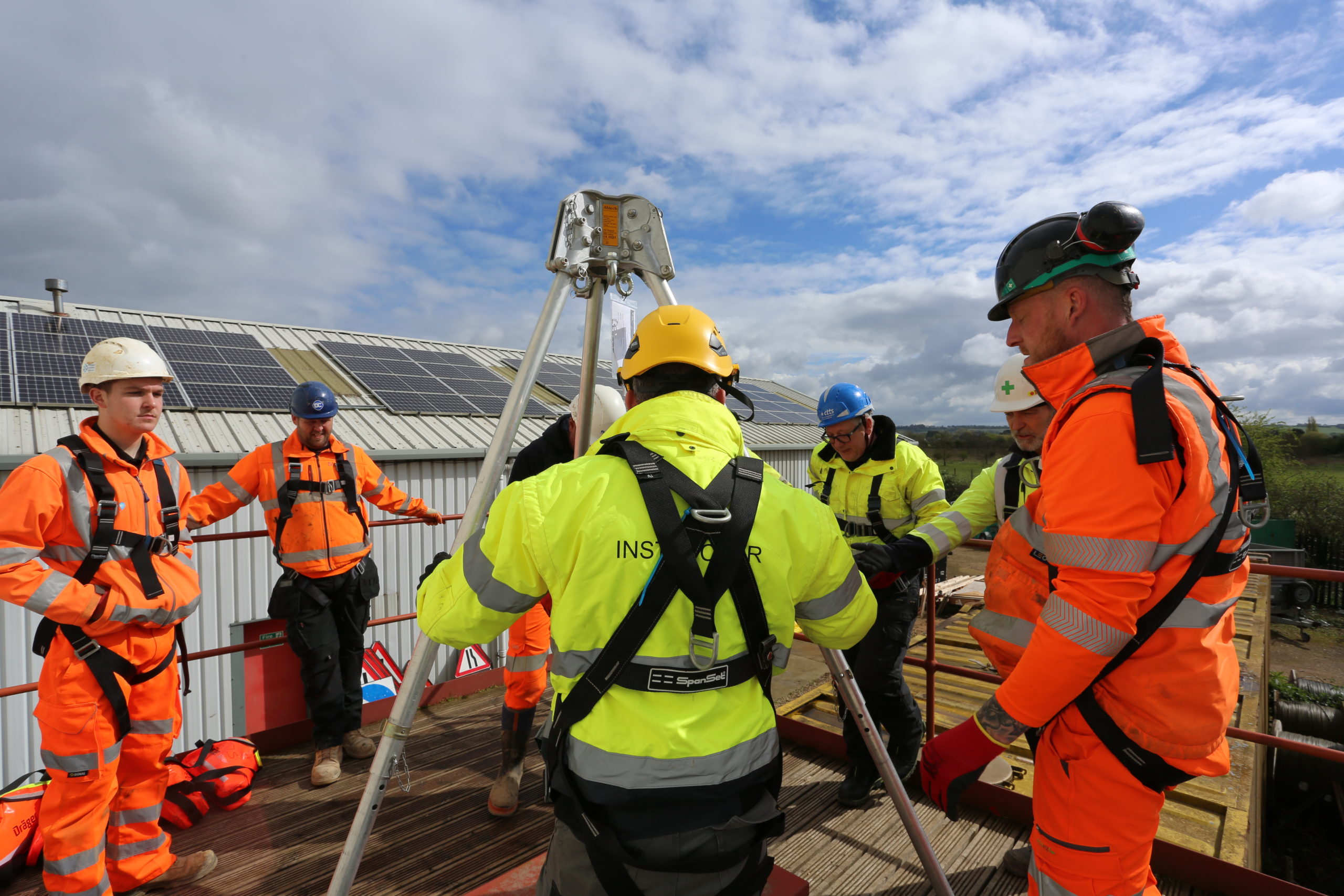


Confined space training is classified into various risk levels.
NC1 represents low-risk confined spaces with minimal hazards. NC2 denotes medium-risk confined spaces where work is primarily conducted at the entrance, requiring no special equipment.
NC3, also a medium risk, involves disconnecting from the line and entering the space, necessitating the use of an Emergency Breathing Apparatus (EBA) kit and specific training.
NC4 is classified as high-risk, often involving water and requiring diving equipment, while NCX also represents high-risk spaces that may require entry via shafts or trolleys.
"I found the course interesting & knowledgeable. The trainers were very good & the course was very well presented. Highly happy with everything." A past training recipient.
The City and Guilds certification provides training up to the NC3 level (non-water), focusing on safe practices when working away from the entrance and disconnected from a winch, with an emphasis on communication between the top person and the entrant. This training lasts two days. Assimilated confined space training is available exclusively at our Lincoln Training Centre.
In the water industry, confined spaces include entering silos and treatment plants with underwater silos. A confined space is defined as an area with a reasonable or specified risk of suffocation, asphyxiation, poisoning, drowning, fire, risk of death, or loss of consciousness, determined by the activities conducted within it.



